 Patient portal
 Donate Today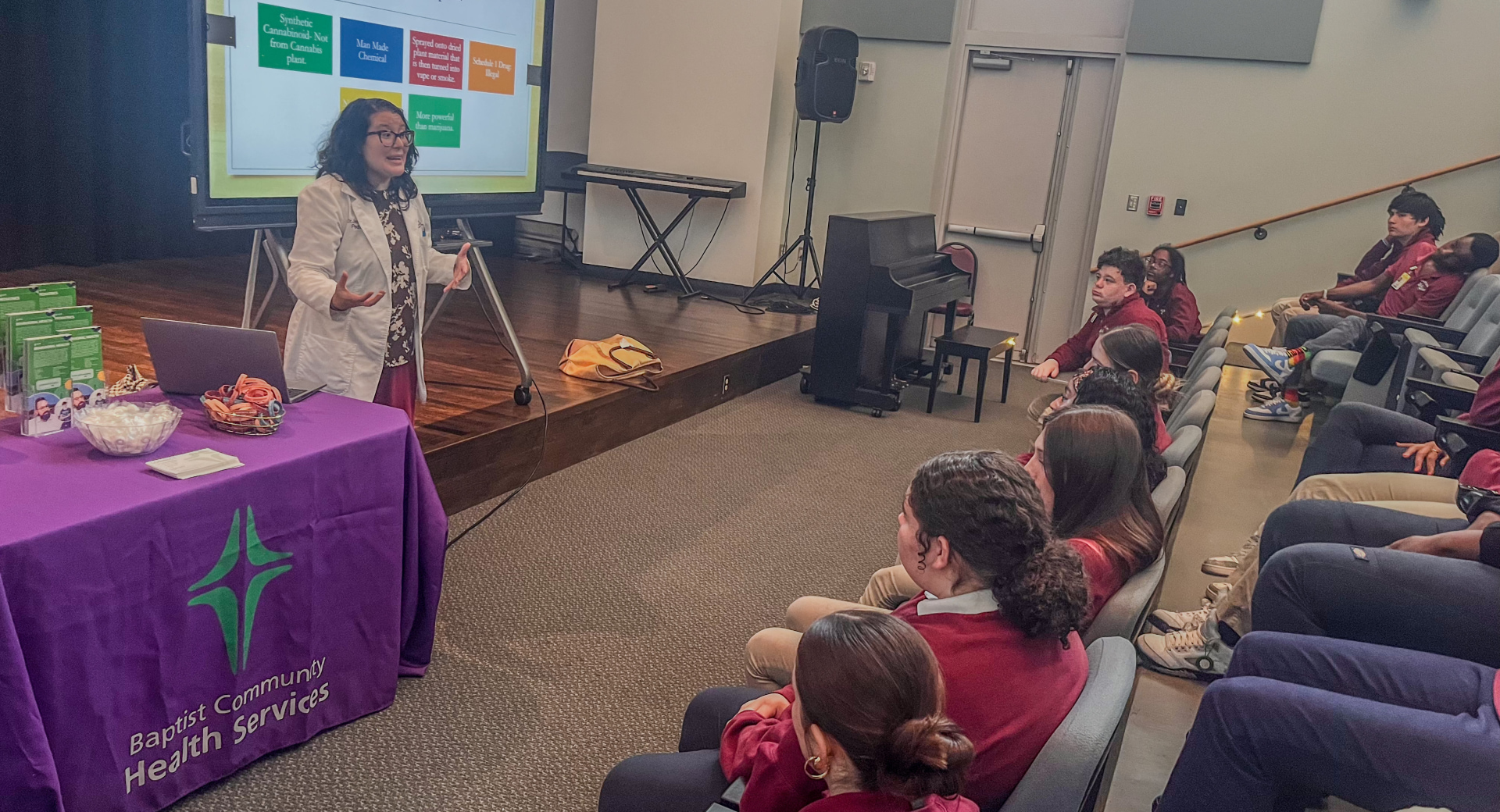
Meeting Teens Where They Are
How BCHS is showing up in schools to educate, support, and protect the next generation
NEW ORLEANS, April 16 — On Thursday, BCHS pediatric provider Dr. May from our Chalmette Pediatrics Clinic spent time with students at Chalmette High School, leading an open and honest conversation about marijuana and its impact on the teenage brain.
The goal was simple. Give students real information, create a safe space for questions, and help them better understand how their choices today can affect their future.
At BCHS, we believe education is one of the most powerful tools we can offer our community, especially when it comes to our youth.
Why these conversations matter
For many teens, marijuana can feel normalized. It is often talked about casually, seen on social media, or viewed as low risk.
But what many young people do not realize is how different today’s marijuana is compared to the past.
Dr. May shared that THC, the chemical responsible for the “high,” is much more concentrated now than it was even 20 years ago.
Higher concentrations mean stronger effects on the brain and body, especially for teens whose brains are still developing.
The teenage brain is still growing
One of the most important messages shared with students was this:
The brain does not fully develop until around age 25.
The prefrontal cortex, the part of the brain responsible for decision making, emotional regulation, and long term planning, is one of the last areas to mature.
When substances like marijuana are introduced during this stage, they can interfere with how the brain develops and functions.
Students learned that marijuana use can impact:
• Memory and attention
• Learning and school performance
• Motivation and problem solving
• Emotional regulation
These are all critical skills that teens rely on every day in school and in life.
Understanding the risks
The conversation also addressed common misconceptions.
While some believe marijuana helps with stress or anxiety, students learned that even occasional use can increase the risk of mental health challenges, including anxiety, depression, and other psychiatric conditions.
Dr. May also discussed how marijuana can become habit forming over time.
According to information shared in the presentation, about 3 out of 10 people who use cannabis develop cannabis use disorder.
Signs may include:
• Using more than intended
• Difficulty cutting back
• Losing interest in activities
• Continued use despite negative effects
These are not always easy to recognize, especially at a young age.
Creating a space for real conversations
What made this visit impactful was not just the information, but the approach.
Students were encouraged to ask questions, think critically, and reflect on what they are seeing in their own environments. The conversation remained judgment free, focused on awareness and support rather than fear.
Because the reality is, education works best when young people feel heard, not lectured.
BCHS is committed to our community
This is what community care looks like.
It is not just happening inside clinic walls. It is showing up in schools, meeting students where they are, and equipping them with the knowledge they need to make informed decisions.
At BCHS, we are committed to supporting the whole person, including mental, emotional, and physical health.
If your child or teen is struggling, whether it is with substance use, stress, or mental health challenges, our Behavioral Health team is here to help.
Call 504.533.4999 or check our website to learn more about our services.